


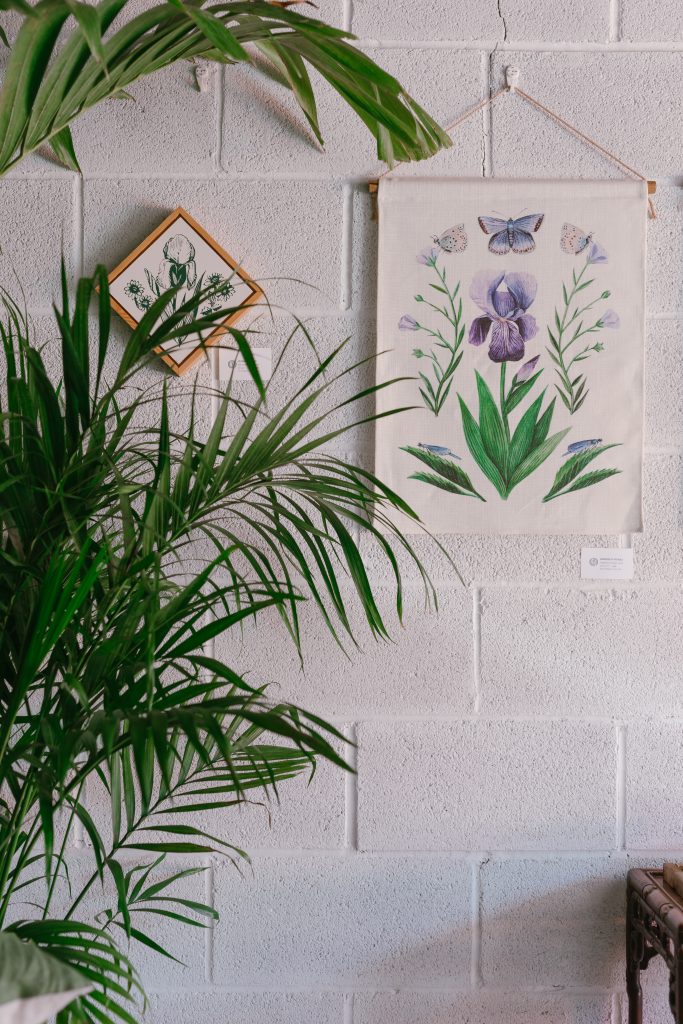
What Would Be in Your Botanical Portrait?
What do you think of when you hear the word portrait?
Maybe you picture a person’s face—their expression, their eyes, the way they smile, or the features that make them instantly recognizable.
But what if a portrait could tell you who someone is without showing you what they look like at all? What if you could tell their story through the flowers they loved, the colors that remind you of them, the places that shaped them, or the feeling you had when you were around them?
That’s what a botanical portrait is.

It isn’t simply a beautiful arrangement of plants. It’s a way of using the natural world as a visual language, allowing flowers, foliage, color, movement, place, and symbolism to hold something of a person’s presence.
The idea first started taking shape as I was creating The Wild Garden, a collection of botanical portraits inspired by people I love. As I worked on those pieces, I began to see how flowers, color, place, and other details from the natural world could create another kind of likeness, one that wasn’t about what someone looked like, but about how their presence felt.
A flower could call up a memory. A color could capture something about their personality. A place could connect them to their heritage or a landscape that mattered to them. Slowly, all of those details could begin to say something about the person without ever showing their face.
And in many ways, those associations are already there before a portrait ever begins. A certain bloom may bring someone to mind before you can explain why, or a scent might return you to a place you haven’t thought about in years. Somewhere along the way, the natural world becomes part of how you remember the people you love.
A botanical portrait brings those connections together in a way that feels deeply personal and symbolic. Flowers, colors, places, memories, and meaningful details can all become part of the same visual story, creating a portrait that doesn’t need to show someone’s face to still feel deeply connected to who they are.
Why Flowers Can Feel So Personal
So many of our memories are tied to the natural world without our realizing it. Think about the flowers that have followed you through your own life. Maybe peonies take you back to your grandmother’s porch, or hydrangeas remind you of the house where you grew up. A certain wildflower might bring back a childhood vacation, while another takes you directly to a wedding, birthday, funeral, or some completely ordinary afternoon that somehow stayed with you.
Flowers have an incredible ability to locate you in a particular place and moment. Sometimes the connection comes from scent or color, and sometimes it’s simply the rhythm of seeing the same plant return every year. You may not even realize how deeply the association has settled into you until you encounter the flower again.
I notice this in my own life all the time. Sunflowers make me think of high school, while daisies and dandelions take me much further back to being little and picking flowers. Orchids are deeply connected to my mom. Irises remind me of one of my grandmothers, while yellow roses make me think of another.
That’s what fascinates me about the meaning we give flowers. I love learning about traditional botanical symbolism, and sometimes those histories can give us a beautiful place to begin, but I don’t think they get the final say. A flower can become meaningful simply because someone you loved grew it, because it belongs to a place that shaped you, or because seeing it brings back a feeling you can’t quite explain.
The flowers that mean the most to you usually mean something because they’re connected to a story. And sometimes, following that story is exactly how you begin finding the flower that belongs at the center of a portrait.


Start With One Flower
If you started imagining a botanical portrait for someone you love right now, you might immediately know which flower should be at the center. Maybe they always grew roses, kept orchids throughout their house, or had a favorite flower everyone in the family knew about.
But you might also draw a complete blank, and honestly, I think that can be just as interesting because it gives us an opportunity to uncover connections you may not have considered before.
If you came to me and said, “I want a botanical portrait of my mom, but I have no idea what flower should represent her,” I wouldn’t begin by handing you a list of flowers and their traditional meanings. I’d begin by asking you about your mom.
Where was she from, and where did her family come from?
Did she grow anything herself?
What flowers do you remember seeing around her?
Did she have a favorite color, a place she loved, or a particular landscape that felt like home?
Maybe there’s something that blooms near her birthday or another date that holds meaning for you.
And then I’d start asking questions that have almost nothing to do with flowers.
I’d want to know what it felt like to be around her, which qualities you most want to celebrate, and why you’re thinking about creating the portrait now. Maybe there’s a birthday or anniversary approaching, or you’re marking a transition, holding onto a memory, or simply feeling drawn to honor someone who matters to you.
Somewhere in that conversation, a thread usually begins to appear.
Sometimes the answer really is as simple as, “She loved this flower.” Other times, the connection comes through heritage, color, season, personality, or a memory that didn’t seem especially significant until you started talking about it. We might eventually find a flower whose shape, movement, delicacy, strength, or even wildness feels like the person you’ve been describing. Then the rest of the story can slowly grow around it.
If you’re imagining someone as you read this, you might start by noticing what comes to mind before you try to make sense of it. Is there a flower you immediately associate with them? A color? A garden, landscape, or time of year? Maybe there isn’t a flower yet, but there’s a feeling: warmth, steadiness, joy, softness, strength. Any one of those can give us a place to begin.
And sometimes, that feeling tells us even more than a favorite flower could.
What Did They Feel Like to You?
Once you’ve found that first flower, this is where the idea starts becoming much more interesting to me than simply cataloging the plants someone liked. I don’t only want to know what they loved. I want to understand what it felt like to be around them.
Were they joyful, grounded, quiet, abundant, curious, strong, gentle, or maybe a little wild? Perhaps they had a steadiness that made everyone around them feel calmer, or an energy that seemed to fill a room. Maybe they were soft-spoken but incredibly resilient, or playful and spontaneous in a way that made ordinary things more fun.
Those qualities can begin shaping the artwork just as much as any literal memory can.
I’m endlessly fascinated by plant anatomy because flowers have such distinct personalities of their own. Their structures, leaves, petals, colors, movement, and growth habits can all communicate something different. Some plants feel airy and delicate, while others are bold and architectural. Some feel abundant or soft, and others are strange, sharp, sturdy, unruly, or almost impossibly intricate.
I love looking for parallels between those physical qualities and the person at the heart of the portrait. A flower doesn’t have to “symbolize” strength in a traditional sense if its structure already feels strong to you, just as something soft or graceful can evoke a person without needing a written definition to explain why.
Color becomes part of that language, too. Many of my botanical portraits are organized around a dominant color, and sometimes I find my way to that palette by thinking first about the person. Maybe someone feels warm and golden to you, or soft and pink. Maybe deep red captures their courage, or green reminds you of their eyes, their garden, the landscape they loved, or simply the sense of calm you felt when you were with them.
The moments I love most are when several of those truths begin to overlap.
A flower might bloom near someone’s birthday while also connecting to a place they loved. Its color might reflect one of their defining qualities, and perhaps the plant itself has a structure or growth habit that somehow reminds you of them. When two or three connections begin reinforcing one another, the choice stops feeling arbitrary. It starts to feel like something that could only belong to that person.
Season and place can add another layer to the portrait because each carries its own feeling. Early spring feels different from late summer, just as a meadow feels different from a woodland garden, desert, or coastline. The plants, colors, textures, and even the creatures that belong to those environments can help shape the emotional world of the piece.
I notice those seasonal associations in my own life all the time. There’s a purple flower outside my front door that blooms around the beginning of September, and moths gather around it while it’s there. Within a few weeks, both are gone, so I’ve come to connect that flower with the end of summer and the bittersweet feeling of watching the season change. It’s a good reminder that sometimes a plant holds meaning not only because of what it is, but because of the place, season, and feeling you’ve attached to it.
Building a World Around That Story
Once we’ve found the central flower and begun to understand the emotional direction of the portrait, I start looking for what might belong around it. This is where research becomes such an important part of my process, but the goal isn’t simply to find more beautiful things to add. I’m looking for details that can deepen this particular person’s story.
I may start with the central flower itself and look at where it grows, what plants share that environment, which pollinators or other creatures might naturally exist around it, and what colors or shapes begin appearing within that world. From there, I can start curating possibilities that make sense both visually and emotionally.
Sometimes the most meaningful connections emerge through the research itself. I might discover a moth that belongs to the right region and also echoes a color already developing in the artwork, or a supporting plant that fits beautifully within the composition and carries an unexpected connection to the person at the center of the portrait. Those are the moments I love most, when place, pattern, color, memory, and symbolism begin overlapping in ways that make the piece feel even more personal.
Bringing the Portrait Together
As all of these pieces begin coming together, the final challenge is deciding how much the portrait actually needs to hold. There may be a dozen flowers, memories, colors, or connections that could belong to someone’s story, but including all of them wouldn’t necessarily make the portrait feel more meaningful.
I’m always looking for hierarchy within the composition. There’s usually one primary flower that gives the portrait its center, and then the supporting plants, foliage, pollinators, and other details help build the world around it. Some carry an important piece of the person’s story, while others might simply create softness, movement, balance, or a place for your eye to rest.
That balance becomes especially important because each botanical portrait is created within a 12 × 16-inch format. It’s an intimate scale, but there’s still enough room to create layers and those smaller moments I love discovering within a piece. Working within that format asks me to be intentional about what carries the most meaning, rather than trying to fit every possible memory or symbol into the painting.
I want your eye to find the central flower first, then wander into the smaller details around it and eventually come back again. Ideally, the composition feels full of things to discover without ever feeling crowded. The portrait should hold enough of someone’s story that you can feel their presence within it, without needing to explain every part of who they were.
And sometimes, the way the artwork will live in your home becomes part of that story, too. Individual botanical portraits can stand beautifully on their own, or several can be brought together as a triptych or larger grouping, allowing each piece to hold its own person or meaning while becoming part of something more expansive.
For artwork that needs to respond to a very specific wall, architectural space, or larger scale, I also create custom botanical commissions outside of the portrait format. I love being able to consider the place where a piece will eventually live, but whether we’re beginning with a particular space or a particular person, the heart of the process is the same: finding the details that carry the most meaning and giving them room to belong together.
What Would Be in Yours?
So, if you were imagining your own botanical portrait now, who would be at the center of it?
Maybe it’s someone you love deeply, someone you miss, or someone whose presence has shaped the way you see the world. Or perhaps the portrait isn’t about another person at all. Maybe there’s a season of your own life, a relationship, or a particular chapter you’d like to give a physical form so that you can continue carrying it with you.
Is there already a bloom you associate with this person? Do you picture a garden, a certain color, the first signs of spring, or a landscape tied to somewhere you spent time together? Is there a place your family came from or a tiny natural detail you’ve always connected to them without really knowing why?
Then think about the person themselves. If you had to choose three or four words to describe what it felt like to be around them, what would you choose? Were they joyful, gentle, curious, strong, abundant, quiet, courageous, or a little wild? What did you notice when you were with them, and what are the qualities you most want to preserve?
You may discover that one of those questions immediately unlocks something. Or you may still have no idea which flower belongs at the center, and that’s okay, too. Sometimes the portrait begins with a flower you’ve loved your whole life, but it could just as easily begin with your mother’s garden, a birthday, your family’s heritage, the feeling of late summer, or simply a color that has always reminded you of someone.
I think that’s one reason these portraits have become so meaningful to me. They bring together all of those tiny details you may have attached to someone without even realizing it, and give the memories, colors, places, and qualities you associate with them somewhere to live together.
I’ve started to think of each botanical portrait as a small positive intention inspired by a person. Each one gathers some of the beauty I associate with someone and gives it a form that can remain, with the hope that the person represented and the person who lives with the artwork will feel loved, seen, remembered, and celebrated through it.
If you’d like to see how all of those layers can come together, you can read the story behind Abundance, a botanical portrait I created in honor of my mom. It holds flowers, color, memory, place, and qualities I associate with her, not as a complete portrait of who she is, but as one small natural world inspired by her presence.
And if you’re beginning to wonder what might belong in a botanical portrait of someone you love, you don’t have to solve it before you reach out. You only need somewhere meaningful to begin, and from there, we can start noticing the flowers, memories, colors, places, and connections that have been there all along.

A Meaningful Story, Painted for You
Perhaps there is a plant that reminds you of someone, a garden that feels like home or a landscape you would like to hold onto. I create original botanical and landscape commissions shaped around the places, memories and details that matter to you. Learn more about the available formats, investment and what it is like to commission a piece.